




Choosing a school is about more than academics, infrastructure or examination results. Parents increasingly want an environment where children can understand concepts, apply what they learn and develop skills that extend beyond textbooks. This is one reason experiential learning schools in Bengaluru are attracting attention from families looking for a more engaging approach to education.
Experiential learning gives children opportunities to learn through activities, projects, observation, experimentation, collaboration and real-world situations. Instead of treating knowledge as something children simply memorise, the approach encourages them to explore how ideas work in practice.
For parents considering modern education options in Bengaluru, understanding experiential learning can make it easier to evaluate whether a school’s teaching approach matches their child’s needs.
What Is Experiential Learning?
Experiential learning is an educational approach in which students learn by actively engaging with an experience and reflecting on what they discover.
For example, rather than learning about a scientific concept exclusively from a textbook, students might investigate it through a classroom experiment. A mathematics lesson could involve solving a practical measurement problem, while environmental studies could include observing plants, studying waste management or exploring local surroundings.
The objective is not to eliminate traditional teaching. Instead, experiential learning can complement classroom instruction by giving students opportunities to apply academic concepts.
Experiential Learning vs Traditional Learning
Traditional approach | Experiential approach |
Greater emphasis on explanation and instruction | Greater emphasis on participation and exploration |
Students may primarily receive information | Students actively interact with concepts |
Learning can be textbook-centred | Learning can include real-world applications |
Assessment may focus heavily on academic output | Activities can also encourage application and reflection |
Teacher often leads the lesson | Teacher can facilitate exploration and discussion |
Why Are Parents Considering Experiential Learning Schools in Bengaluru?
Bengaluru has a diverse education landscape, with parents able to consider different curricula, teaching philosophies and school environments.
For families comparing experiential learning schools in Bengaluru, one important question is whether the school gives children meaningful opportunities to participate rather than simply listen.
Experiential learning can be particularly valuable when children are encouraged to:
- ask questions
- investigate problems
- work with classmates
- communicate their ideas
- make observations
- test possible solutions
- reflect on mistakes
- connect classroom concepts with everyday situations
The exact implementation varies from school to school, so parents should look beyond marketing terminology and understand what students actually experience during the school day.
1. It Makes Learning More Meaningful
Children often understand an idea more clearly when they can connect it to something they have seen or done.
For example, a lesson involving money can be connected with budgeting or shopping activities. A science concept can be explored through experiments. Language skills can be developed through presentations, storytelling, discussions and creative projects.
This connection between academic concepts and practical experiences can make lessons more relevant.
2. Activity-Based Learning Encourages Participation
Activity-based learning places students in an active role.
Instead of simply completing worksheets, children may participate in:
- group projects
- demonstrations
- experiments
- presentations
- educational games
- problem-solving activities
- model-making
Activities should have a clear educational purpose. Simply keeping children busy is not the same as meaningful experiential learning.
3. It Can Develop Problem-Solving Skills
Real-world problems rarely have answers that can be found by memorising one sentence from a textbook.
When students work on projects or practical challenges, they may need to identify a problem, consider different approaches, test an idea and revise their solution.
These experiences can help children practise structured thinking and problem-solving in an age-appropriate way.
4. It Supports Collaborative Learning
Many experiential activities involve working with others.
Children may need to divide responsibilities, communicate ideas, listen to different viewpoints and complete a shared project.
These interactions can complement academic learning by giving students opportunities to practise communication and teamwork.
5. It Can Support Holistic Education
Holistic education considers multiple dimensions of a child’s development rather than focusing exclusively on academic performance.
Depending on the school’s programme, experiential opportunities may connect with:
- creativity
- communication
- collaboration
- physical activity
- arts
- environmental awareness
- leadership
- independent thinking
This is where experiential learning can work alongside extracurricular activities and other elements of a broader school experience.
What Should Parents Look for in an Experiential Learning School?
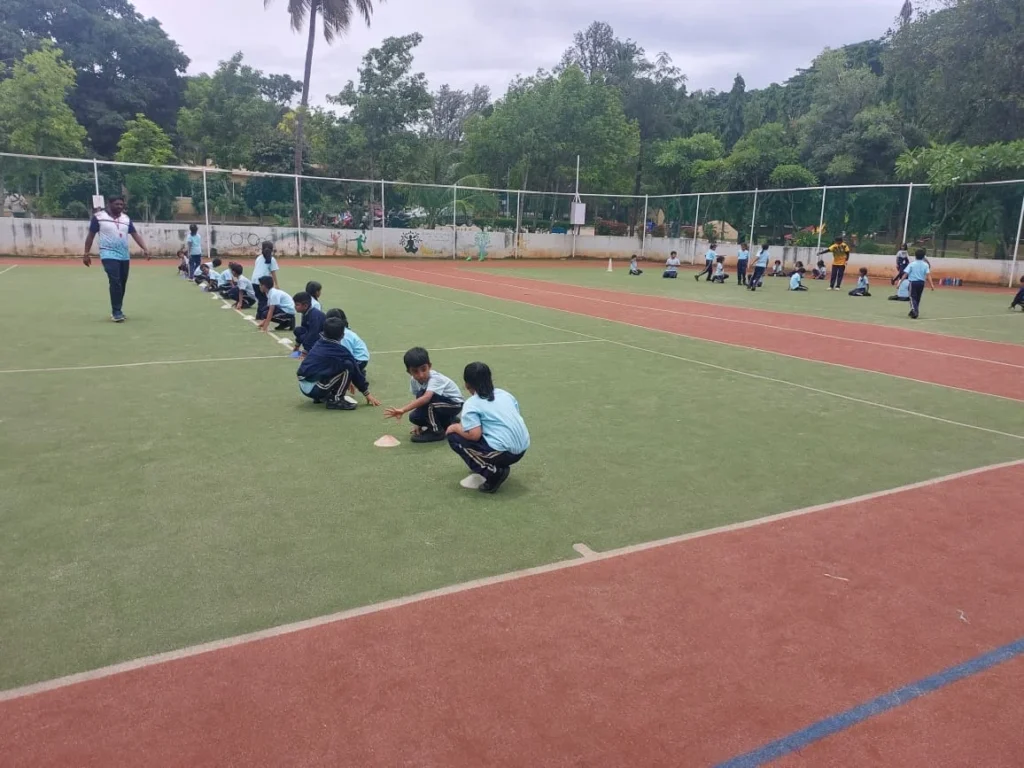
Not every school that uses the phrase “experiential learning” implements it in the same way.
When visiting a school, parents can ask practical questions.
Ask About Classroom Practice
Instead of asking only whether the school offers experiential learning, ask:
- How frequently do students participate in project-based activities?
- Which subjects use activity-based learning?
- Are activities appropriate for different age groups?
- How are projects connected to the curriculum?
- How does the school assess learning from activities?
- Do students get opportunities to present or explain their work?
The answers can provide a better picture of the school’s actual approach.
Look at the Learning Environment
uring a school visit, parents can observe whether children appear to have opportunities to:
- ask questions
- collaborate
- create
- experiment
- discuss ideas
- use learning resources
- participate in structured activities
The physical environment is only one part of the picture. The quality of interaction between teachers and students is equally important.
Experiential Learning and CBSE Education
Parents comparing CBSE schools in Bengaluru may wonder whether experiential learning fits within a structured curriculum.
Experiential approaches can be incorporated into curriculum-based education through projects, activities, practical work, discussions, investigations and other classroom experiences.
However, implementation depends on each school’s teaching practices, resources and academic planning.
Parents should therefore evaluate the actual learning experience offered by a school rather than assuming that a curriculum label alone determines teaching methodology.
Common Mistakes Parents Should Avoid
Choosing a School Based Only on Marketing Terms
Words such as “innovative”, “modern” and “experiential” can sound appealing, but parents should ask what they mean in practice.
Assuming More Activities Always Mean Better Learning
Activities should support educational objectives. A well-designed activity that helps children understand a concept may be more valuable than several unrelated activities.
Ignoring the Child's Individual Needs
Children learn differently. A school environment that works well for one child may not necessarily be the ideal fit for another.
Focusing Only on Infrastructure
Modern classrooms and facilities can enhance learning, but they do not automatically create effective teaching.
Parents should consider curriculum, teachers, classroom practices, student support, activities and the overall school environment together.
How Can Parents Evaluate Schools in Bengaluru?
A useful school-selection process can include these steps:

Who Can Benefit From Experiential Learning?
Experiential learning can be useful for children across different age groups, although the activities should be adapted to their developmental stage.
It may be particularly appealing to parents who want a school environment that encourages children to:
- learn by doing
- explore questions
- participate actively
- apply classroom knowledge
- work collaboratively
- develop communication skills
- connect learning with everyday experiences
It should not, however, be treated as a universal solution. Parents should consider the child’s needs, the school’s approach and the quality of implementation.
How Edify School Bengaluru Approaches Modern School Education

For parents exploring schools in Bengaluru, Edify School Bengaluru can be included in the evaluation process when looking for an education environment that combines academic learning with broader developmental opportunities.
Rather than choosing a school solely because it uses a particular educational term, parents can explore the school’s curriculum, teaching practices, activities, learning environment and overall approach.
Families interested in understanding the school’s offering can visit the Edify School Bengaluru website and review the information available for prospective parents.
Experiential Learning Is About More Than “Fun”
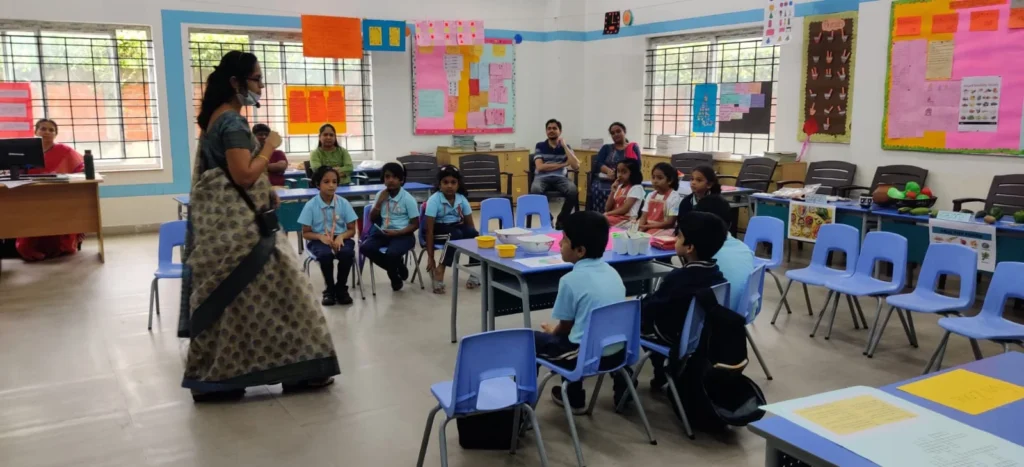
One common misconception is that experiential learning simply means making school more entertaining.
Well-designed experiential education goes further.
A meaningful activity should help students think, apply, question, communicate or reflect. The experience is valuable because it supports a learning objective.
The strongest implementation therefore combines teacher guidance with opportunities for students to explore and apply concepts.
FAQ Section
What is experiential learning in school education?
Experiential learning allows students to learn through activities, projects, experiments, observation, problem-solving and reflection. Instead of relying only on textbook explanations, children get opportunities to apply concepts in practical or simulated situations. The exact activities vary according to the child’s age, subject and curriculum.
How do I choose experiential learning schools in Bengaluru?
Parents should examine how a school actually implements experiential learning. Ask about project work, classroom activities, practical learning, teacher involvement and assessment. A campus visit can also help parents understand the classroom environment and how actively students participate in learning.
Is experiential learning suitable for CBSE schools?
Yes, experiential approaches can complement structured curriculum-based education. Projects, practical activities, investigations, discussions and applications can be incorporated into different subjects. Parents should evaluate how an individual CBSE school implements these approaches rather than assuming that all schools follow the same methodology.
What is the difference between experiential learning and activity-based learning?
The terms overlap, but they can emphasise different aspects. Activity-based learning focuses strongly on learning through structured activities, while experiential learning generally places greater emphasis on the broader experience, application and reflection. A school may use both approaches as part of its teaching strategy.
Does experiential learning improve academic performance?
Experiential learning is intended primarily to deepen understanding and encourage active participation. Its impact on academic outcomes depends on factors such as teaching quality, curriculum alignment, student needs and implementation. Parents should therefore avoid choosing a school based on claims of guaranteed academic improvement.
What activities are included in experiential learning?
Activities can include experiments, projects, field-based learning, presentations, group work, simulations, model-making, investigations and problem-solving exercises. The appropriate activity depends on the child’s age and learning objective. Effective activities should have a clear connection to what students are expected to learn.
Why is holistic education important for children?
Holistic education looks beyond academic knowledge and can include areas such as communication, creativity, collaboration, physical development and social skills. A balanced school environment can provide opportunities for children to develop different abilities while continuing to build a strong academic foundation.

 Admission Form
 Talk to Counsellor
 WhatsApp
 Email
 Location


