
Understanding Child Development
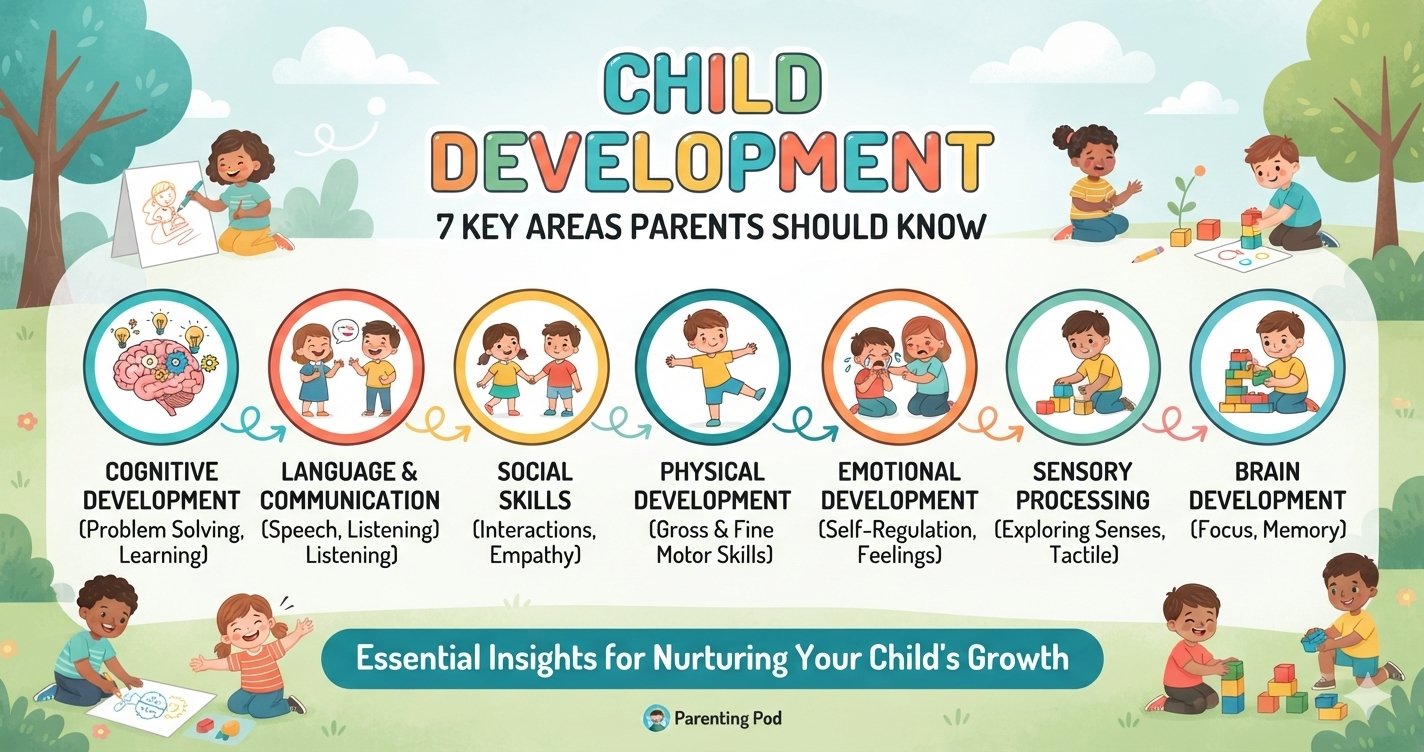
Every child grows in their own way. One child may begin speaking confidently early, while another may take more time but show remarkable curiosity through play and exploration. Child development refers to the gradual changes children experience as they grow and learn, including physical, cognitive, language, social and emotional development. These areas are closely connected rather than functioning as separate compartments. The World Health Organization describes early childhood development in terms of interconnected capacities including sensory-motor, social-emotional, language and cognitive development, while current CDC guidance similarly groups developmental milestones across social-emotional, language/communication, cognitive and movement/physical areas.
For parents, understanding these areas can make it easier to recognise how children learn and what kind of support they may need. Development is not simply about reaching a checklist of skills by a particular date. Children develop at different rates, and individual circumstances can influence their progress. A supportive home and school environment can provide opportunities for children to communicate, play, explore, solve problems, build relationships and become increasingly independent. This article explores seven important aspects of child development and practical ways parents can support them while choosing an educational environment that encourages the whole child.
What Are the Main Areas of Child Development?
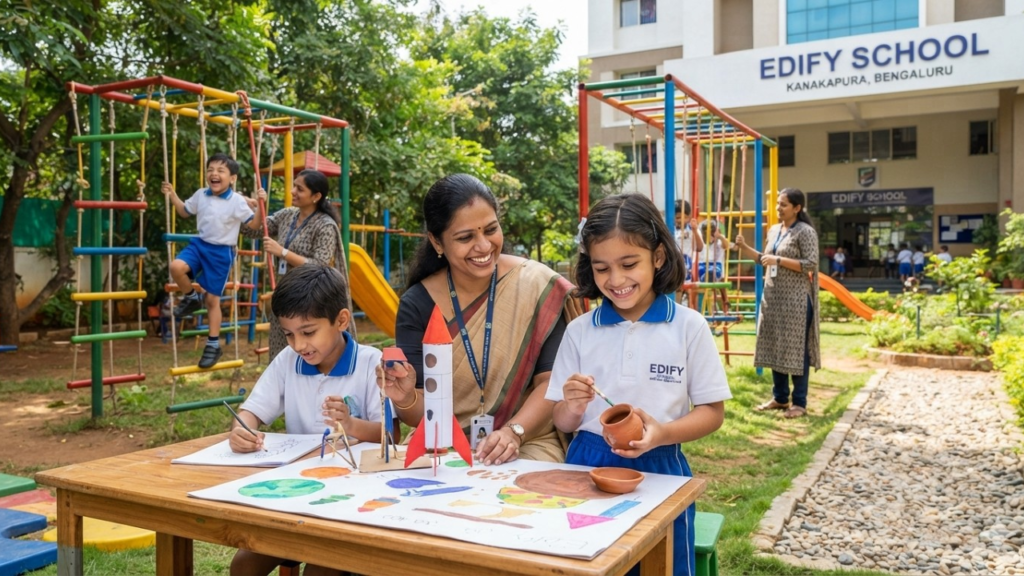
Child development is multidimensional. A child who is physically active may also be developing coordination, confidence and social skills through play. Similarly, storytelling can support language, imagination, memory and emotional expression at the same time. The WHO identifies cognitive, language, motor and socio-emotional development as interconnected domains, reinforcing the idea that development should be viewed as a whole rather than as isolated skills.
Parents therefore benefit from looking beyond marks, vocabulary or physical growth alone. A child is constantly learning how to communicate, make decisions, interact with others, manage feelings and understand the world around them. The table below provides a simple overview.
Development Area | What It Can Involve | How Adults Can Support It |
Physical Development | Movement, coordination, and motor skills | Outdoor play, sports, and age-appropriate activities |
Cognitive Development | Thinking, memory, and problem-solving | Puzzles, questions, exploration, and games |
Language Development | Speaking, listening, reading, and communication | Conversations, stories, and reading |
Social Development | Cooperation, sharing, and relationships | Group play and collaborative activities |
Emotional Development | Recognizing and managing feelings | Responsive communication and emotional support |
Creative Development | Imagination, expression, and original ideas | Art, music, storytelling, and open-ended activities |
Independence | Decision-making and self-help skills | Age-appropriate responsibilities and choices |
7 Key Areas of Child Development Parents Should Understand
1. Physical Development
Physical development includes the gradual development of movement, coordination and motor abilities. For young children, this can involve activities such as walking, running, jumping, climbing, holding objects, drawing and using everyday tools. As children grow, physical development becomes increasingly connected with confidence and participation. A child who feels comfortable moving around may be more willing to join games, explore new spaces and participate in group activities.
Parents do not need to turn physical development into a formal training programme. Everyday opportunities can be enough. Outdoor play, walking, cycling, ball games, dancing and age-appropriate household activities can encourage movement while keeping children engaged. The CDC’s developmental milestone guidance includes movement and physical skills alongside cognitive, communication and social-emotional development, demonstrating why physical growth is considered part of broader child development.
Schools can contribute by providing opportunities for physical activity, play, sports and hands-on learning. For parents considering schools in Bengaluru or Kanakapura, it can therefore be useful to ask how students balance classroom learning with movement and activity.
2. Cognitive Development
Cognitive development involves how children learn, think, remember, reason and solve problems. It can be seen when a child works out how a toy functions, remembers instructions, sorts objects, recognises patterns or asks questions about something unfamiliar. These abilities develop gradually through interaction with people and the environment.
Parents can support cognitive development by allowing children to explore rather than immediately providing every answer. A simple question such as “What do you think will happen?” encourages a child to make a prediction. Puzzles, building blocks, matching games, storytelling and simple experiments can also encourage children to observe, compare and reason.
The CDC describes cognitive milestones in terms of learning, thinking and problem-solving. This is an important reminder that learning is not restricted to formal academic work. Children are developing cognitive skills whenever they investigate something, make a connection or try a different solution.
3. Language and Communication Development
Language development helps children understand others and express their own thoughts, needs, questions and feelings. It includes listening, speaking, vocabulary, conversation, storytelling and, as children grow, reading and writing. Communication also supports other aspects of learning because children need language to explain what they know and ask for help when they need it.
One of the simplest ways parents can encourage language development is through regular conversation. Talk about what you see during a walk, ask your child to describe a picture, discuss a story after reading it or invite them to explain how they completed a task. These conversations do not need to feel like lessons. Natural interaction can create valuable opportunities for children to listen and respond.
The CDC’s age-based milestones include communication skills such as participating in conversations, telling stories and answering questions. Parents should remember, however, that milestone information is a developmental guide rather than a tool for diagnosing an individual child.
4. Social Development
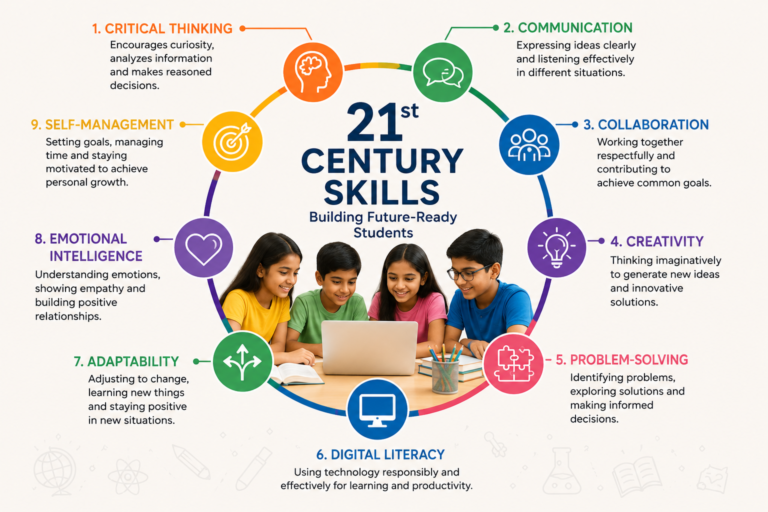
Children learn how to interact with other people through everyday relationships and experiences. Social development can include learning to cooperate, take turns, listen to others, participate in groups and build friendships. These abilities are especially important once children begin spending more time in school environments.
Group activities can create natural opportunities for social learning. A child may need to negotiate during a game, share materials during a project or listen to another student’s opinion during a discussion. These experiences help children understand that other people may have different ideas, preferences and feelings.
Parents can support this process by creating opportunities for age-appropriate interaction. Playdates, family activities, group hobbies and community experiences can all contribute. When disagreements happen, adults can help children understand what occurred rather than solving every conflict immediately. Asking, “What do you think the other person felt?” can encourage perspective-taking.
5. Emotional Development
Emotional development involves recognising, expressing and gradually managing feelings. Children may experience excitement, frustration, disappointment, fear, pride and many other emotions, sometimes within a short period. Learning to identify those emotions is part of growing emotional awareness.
Adults play an important role here. Children benefit from relationships in which they feel listened to and supported. The CDC recommends positive parenting practices including warmth and sensitivity, predictable responses, routines, communication and appropriate discipline without harshness.
Parents do not need to prevent children from experiencing difficult emotions. Instead, they can help children understand what they are feeling and learn appropriate ways to respond. Saying, “I can see that you are frustrated because the game did not go the way you expected,” gives the child language for an experience. Over time, such conversations can help children develop emotional awareness and self-regulation.
6. Creative Development
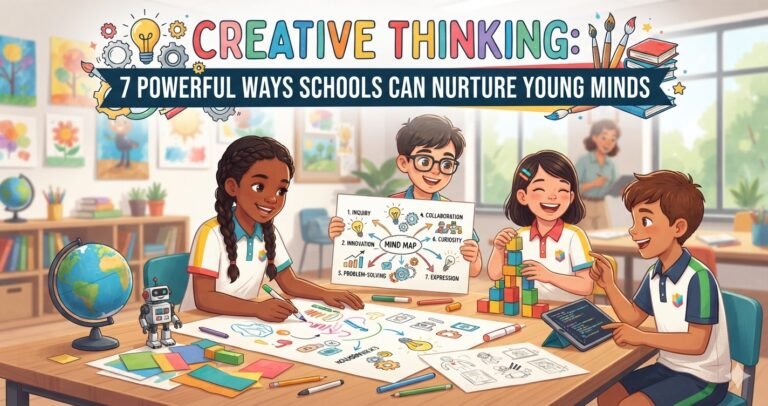
Children naturally explore through imagination. A cardboard box can become a house, a vehicle or a spaceship. A simple drawing can turn into a story. A collection of objects can become the materials for an invented game. Creative development gives children opportunities to imagine, experiment and express ideas in different forms.
Creative activities can include drawing, music, storytelling, role play, construction, craft work, drama and open-ended problem-solving. The goal should not always be a perfect final product. The process of exploring an idea can be just as valuable.
Schools can encourage creativity by giving students opportunities to make choices, ask questions and approach tasks in different ways. This is one area where a child-centred learning environment can make a meaningful difference. For parents evaluating Edify School, it can be useful to understand how creative expression and exploration are incorporated into the wider learning experience rather than treated simply as occasional activities.
7. Independence and Self-Confidence
As children grow, they gradually need to become more independent. This can begin with simple tasks such as choosing between two appropriate options, putting away belongings, organising school materials or completing age-appropriate responsibilities. Independence does not mean expecting children to manage everything alone. It means giving them opportunities to practise skills with suitable guidance.
Parents sometimes find this challenging because helping a child is often quicker than allowing them to try. But doing everything for a child can reduce opportunities to practise. A better approach is to provide support when needed while allowing the child to take responsibility for manageable tasks.
Schools also contribute to independence by giving students responsibilities and encouraging participation. Children can learn to organise materials, work with classmates, present ideas and reflect on their own learning. These experiences can gradually build confidence and a sense of ownership.
How Parents Can Support Child Development at Home
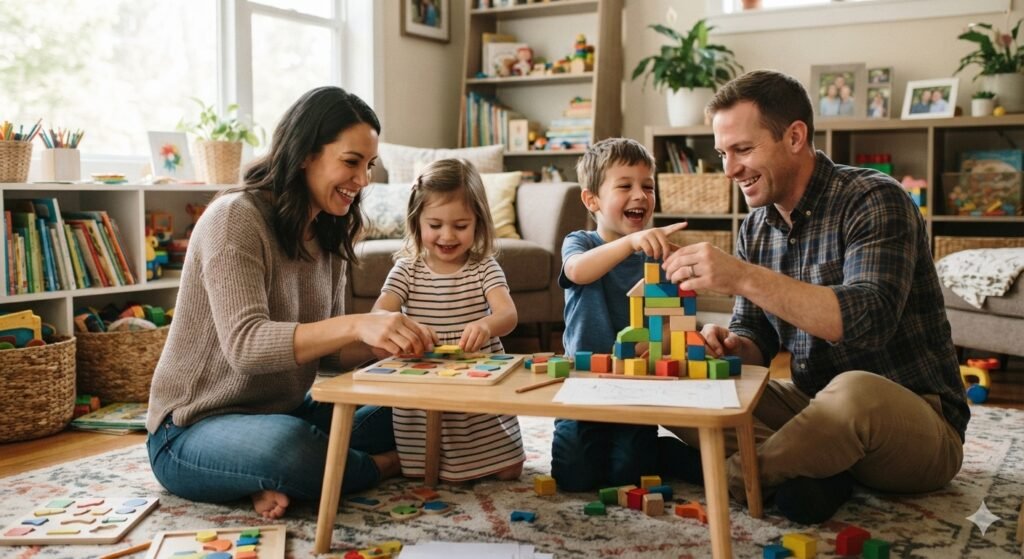
A child’s home environment is an important part of development. The WHO’s guidance on early childhood development highlights responsive caregiving and opportunities for early learning as important elements of nurturing care.
Parents can support development through ordinary routines rather than trying to turn every moment into an educational exercise. Reading together, talking during meals, playing games, going outdoors and involving children in simple household tasks can all create opportunities to learn.
A few practical habits can include:
- Read and talk regularly: Discuss characters, events and new words rather than simply reading the text.
- Encourage questions: Ask children what they think and give them time to answer.
- Allow purposeful play: Let children create games, build objects and use their imagination.
- Offer choices: Give age-appropriate options to encourage decision-making.
- Encourage movement: Make physical activity part of everyday routines.
- Listen carefully: Give children space to express their thoughts and feelings.
- Celebrate effort: Recognise persistence and improvement instead of focusing only on outcomes.
These habits do not require expensive resources. Consistency, interaction and responsive relationships often matter more than elaborate activities.
Common Mistakes Parents Should Avoid
Parents naturally want to give their children every possible advantage, but too much pressure can sometimes work against healthy development. Comparing one child constantly with another may create unnecessary anxiety because children do not all develop at exactly the same pace. Another common mistake is focusing almost entirely on academic performance while overlooking communication, emotional wellbeing, relationships, physical activity and independence.
Overscheduling can also reduce opportunities for free play. Children need time to explore without every activity having a predetermined outcome. Another mistake is stepping in too quickly whenever a child faces difficulty. Allowing children to attempt an age-appropriate task, make mistakes and try again can help them develop resilience and problem-solving skills.
Parents should also avoid interpreting every difference in development as a problem. Developmental milestones provide useful guidance, but they should be considered in context. If a parent has a persistent concern about a child’s development, communication, behaviour, learning or physical abilities, discussing the concern with an appropriate paediatrician or qualified developmental professional is a sensible next step.
What Should Parents Look for in a School?
Choosing a school is an important decision because children spend a substantial part of their day learning and interacting in that environment. Parents in Bengaluru and Kanakapura can look beyond examination results and ask how a school supports the wider development of its students.
Consider whether the school provides opportunities for:
- collaborative learning and group interaction;
- sports and physical activity;
- reading and communication;
- creative expression;
- hands-on and experiential learning;
- age-appropriate independence;
- emotional and pastoral support;
- meaningful parent-school communication.
It is also useful to ask teachers how they respond when children learn at different speeds. A child-centred environment should recognise individual strengths while maintaining appropriate academic expectations.
Edify School presents a learning approach that places emphasis on holistic development and provides opportunities for students to participate in academic, creative and co-curricular experiences. For parents exploring educational options in Karnataka, visiting the school, understanding its curriculum and discussing their child’s individual needs can provide more useful information than relying on a single ranking or advertisement.
When Should Parents Seek Professional Guidance?
Development varies from child to child, but parents should not feel they have to manage every concern on their own. If a child appears to lose previously acquired skills, consistently struggles with communication, movement, social interaction or learning, or if a parent simply feels that something is not progressing as expected, professional guidance can help.
Developmental monitoring can help identify areas that may benefit from additional support. The CDC provides age-based milestone resources covering how children play, learn, speak, act and move. Such resources can help parents prepare questions for conversations with healthcare or education professionals, but they should not be used as a substitute for an individual assessment.
Early support can be valuable when a genuine developmental concern exists. WHO guidance also emphasises the importance of nurturing care and coordinated support for children with developmental delays or disabilities. The right response depends on the child’s individual circumstances, so parents should seek advice from appropriately qualified professionals when concerns persist
How School and Home Can Work Together
Child development works best when parents and educators communicate rather than treating home and school as completely separate worlds. Teachers can share observations about classroom participation, friendships, communication and learning, while parents can provide valuable context about the child’s interests, routines and behaviour outside school.
Regular communication can also help adults identify strengths that may otherwise be overlooked. A child who is quiet in a classroom may be highly expressive during family conversations. Another child who struggles with written tasks may demonstrate strong problem-solving skills during practical activities. Sharing these observations gives adults a broader picture.
For Edify School and families considering an educational journey together, this parent-school partnership can be an important part of supporting children. The goal is not to make every child follow an identical path. It is to create a supportive environment where children can develop academically while also becoming confident, communicative, curious and responsible individuals.
Conclusion: Supporting the Whole Child
Child development is a continuous process involving far more than academic achievement. Physical abilities, thinking skills, language, relationships, emotional awareness, creativity and independence all contribute to a child’s growth. The WHO and CDC both emphasise the interconnected nature of different developmental areas, while current guidance highlights the value of responsive relationships, learning opportunities and supportive environments.
For parents in Bengaluru, Kanakapura and across Karnataka, the most useful approach is to look at development as a whole. Give children opportunities to play, communicate, explore, solve problems, build relationships and take age-appropriate responsibility. At school, look for an environment that combines strong academic foundations with opportunities for holistic development. Edify School can be explored by families who want to understand how its educational approach aligns with their child’s needs and aspirations. If you are considering admission, you can enquire about the school admission process and speak with the school team about the next steps.
I. FAQ section
1. What are the main areas of child development?
The main areas include physical, cognitive, language and communication, social, emotional and creative development. Independence is another important aspect as children grow. These areas are interconnected, so progress in one area can support development in others. Developmental expectations also vary according to a child’s age and individual circumstances.
2. Why is child development important?
Child development provides the foundation for learning, relationships, communication, independence and wellbeing. Early experiences and supportive relationships can influence how children interact with their environment and approach learning. Parents and educators can support development by providing safe, responsive and stimulating environments.
3. How can parents support child development at home?
Parents can support development through reading, conversation, play, outdoor activities, storytelling, simple household responsibilities and age-appropriate choices. Spending responsive, meaningful time with children is particularly valuable. The WHO recommends responsive caregiving and opportunities for early learning as important elements of nurturing care.
4. What is the role of schools in child development?
Schools provide opportunities for children to learn academic concepts while developing communication, collaboration, independence, creativity and social skills. Activities such as group projects, sports, discussions, practical learning and creative programmes can contribute to a broader educational experience.
5. Are developmental milestones the same for every child?
No. Milestones provide general information about skills commonly observed at particular ages, but children can develop at different rates. Parents should consider the overall pattern of development rather than comparing a child constantly with peers. Persistent concerns can be discussed with a qualified healthcare or developmental professional.
6. When should parents seek professional help regarding development?
Parents can seek professional guidance when they have ongoing concerns about communication, movement, learning, behaviour, social interaction or other developmental areas. A professional can consider the child’s individual circumstances and determine whether further assessment or support may be appropriate.