
Choosing a school is one of the most important decisions parents make for their children. Beyond marks and examinations, parents want to know whether their child’s education will build the knowledge, confidence and skills needed for higher education and an evolving career landscape.
This is one reason many families researching CBSE schools in Bengaluru look beyond the curriculum itself and examine how a school prepares students for life after school.
The CBSE framework includes academic subjects alongside areas such as skill education, general studies and health and physical education. CBSE’s curriculum documents also emphasise competencies, application of learning and real-world contexts.
For parents considering schools in Bengaluru, understanding these elements can help them make a more informed decision.
What Makes the CBSE Curriculum Relevant to Future Education?
The CBSE curriculum provides a structured academic foundation across school years. At the senior secondary level, CBSE describes learning areas that include languages, academic subjects, skill electives, general studies and health and physical education.
This breadth can give students opportunities to develop both subject knowledge and broader competencies.
However, the curriculum is only one part of a child’s education. The way a school implements it through teaching, assessment, projects, activities and student support can make a significant difference to the overall learning experience.
1. CBSE Schools Build a Strong Academic Foundation
Higher education requires students to have a sound understanding of the subjects they choose to pursue.
A well-structured school education can help students develop:
- Subject knowledge
- Reading and comprehension skills
- Mathematical reasoning
- Scientific thinking
- Research habits
- Written and verbal communication
- Independent study skills
These foundations become particularly important as students move towards senior secondary education and eventually select higher education pathways.
Parents should therefore evaluate not only whether a school follows CBSE, but also how effectively students are supported in understanding and applying what they learn.
2. The Curriculum Can Encourage Application of Knowledge
Modern education increasingly places importance on what students can do with knowledge, rather than simply recalling information.
CBSE has undertaken work around competency-based education, with an emphasis on higher-order skills and applying learning in real-world or authentic situations.
This approach can be reflected in activities such as:
- Projects
- Case-based questions
- Practical work
- Investigations
- Presentations
- Discussions
- Problem-solving tasks
For students preparing for higher education, learning how to apply concepts can be valuable because university study often requires analysis, interpretation, research and independent thinking.
3. Students Can Develop Career-Relevant Skills
Career readiness does not begin only after a student enters college.
Schools can help students gradually develop transferable skills that are useful across different academic and professional pathways.
Important skills include:
Communication: Expressing ideas clearly through speaking and writing.
Critical thinking: Examining information and considering different perspectives.
Problem-solving: Breaking down challenges and identifying possible solutions.
Collaboration: Working effectively with classmates and respecting different viewpoints.
Digital awareness: Understanding how technology can be used responsibly for learning and productivity.
Self-management: Developing organisation, time management and independent learning habits.
These skills do not point towards one particular profession. Instead, they can provide a foundation that students may carry into different areas of higher education and work.
4. Skill Education Can Expand Students' Exposure
Career choices can change as children discover new interests.
This makes exposure to different fields valuable during school years.
CBSE’s current ecosystem includes skill education and a range of skill-oriented subjects. Its official resources also provide information relating to subjects and combinations available to students.
Depending on the school and grade, students may encounter areas beyond conventional academic subjects.
Such exposure can help students understand that education can involve academic knowledge, practical skills, creativity, communication and technology.
Parents should check the actual subjects and programmes offered by an individual school rather than assuming that every CBSE school provides identical opportunities.
5. Extracurricular Activities Can Support Overall Development
Academic performance is important, but children also benefit from opportunities to explore interests outside their core subjects.
Extracurricular activities may include areas such as:
- Sports
- Music
- Art
- Theatre
- Public speaking
- Clubs
- Competitions
- Community activities
- Technology-related activities
The value of these opportunities depends on their quality and how well they fit into a student’s overall schedule.
For example, participation in a team activity may give a student opportunities to practise collaboration and communication. A presentation or public-speaking activity can encourage confidence and structured expression.
The goal should not be to fill every hour with activities. Instead, parents can look for a balanced school environment that gives children opportunities to explore their interests without compromising academic learning and wellbeing.
6. Future-Ready Education Requires More Than Textbooks
The world students enter after school may continue to change rapidly.
Students may encounter new technologies, different forms of work and emerging areas of study that are difficult to predict years in advance.
This is why future-ready education should focus not only on teaching current information but also on developing the ability to learn, adapt and solve unfamiliar problems.
The National Education Policy 2020 emphasises holistic development and greater flexibility in subject choices, including areas such as arts, crafts and vocational skills. It also discusses reducing rigid boundaries between curricular, extracurricular and vocational or academic learning.
For parents, this reinforces an important point: a future-oriented school should help children develop the capacity to continue learning rather than prepare them for only one predetermined career.
7. Schools Can Help Students Prepare for Higher Education
The transition from school to college involves more than selecting a course.
Students may need to manage greater academic independence, organise their time, communicate with teachers and peers, complete projects and make informed decisions about their interests.
A school can gradually prepare students by providing opportunities for:
- Independent projects
- Research and presentations
- Subject exploration
- Academic discussions
- Leadership activities
- Career awareness
- Skill development
- Collaborative assignments
These experiences can help students become more comfortable taking responsibility for their learning.
School Education and Higher Education: A Simple Comparison
School Stage | Skills Students Can Develop | Future Relevance |
Primary Years | Curiosity, communication and basic problem-solving | Builds learning confidence |
Middle School | Collaboration, research and subject exploration | Develops awareness of interests |
Secondary School | Analytical thinking, application and study habits | Supports academic preparation |
Senior Secondary | Subject depth, independence and career exploration | Builds higher education readiness |
These are broad developmental areas rather than guaranteed outcomes. Every student’s progress depends on individual circumstances, teaching quality and the support available at home and school.
What Should Parents Look for When Choosing a CBSE School?
When comparing CBSE schools in Bengaluru, parents should look beyond the board name.
Consider the following factors:
Common Mistakes Parents Should Avoid
Why School Fit Matters
There is no single definition of the best schools in Bengaluru for every child.
The right choice depends on factors such as:
- The child’s interests
- Learning needs
- Academic goals
- Preferred activities
- Family priorities
- Location and commute
- School environment
- Available support
Parents should therefore compare schools based on their child’s needs rather than relying on a single ranking or recommendation.
Exploring CBSE Education at Edify School Bengaluru
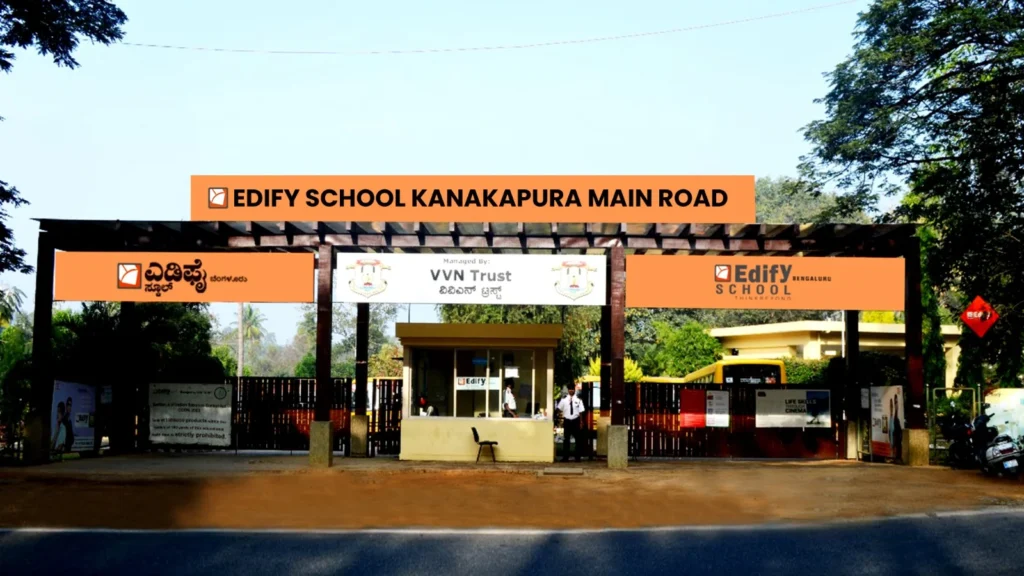
For parents exploring education options in Bengaluru, Edify School Bengaluru is one school that families can consider as part of their research.
Parents can review the school’s educational approach, programmes, learning environment and admission information to determine whether it aligns with their expectations for their child’s school journey.
The school’s website provides an appropriate starting point for families researching the school and its educational offering: Edify School Bengaluru
A Practical Checklist Before Choosing a School
Before making a final decision, parents can ask:
- Does the school’s teaching approach match my child’s needs?
- How does the school implement the CBSE curriculum?
- Are students encouraged to apply what they learn?
- What skill-development opportunities are available?
- Which extracurricular activities are offered?
- What subject options are available in senior classes?
- How does the school support independent learning?
- How does the school communicate with parents?
- What does the classroom environment look like?
- Does the overall school philosophy align with our family’s priorities?
Taking time to answer these questions can make the school-selection process more structured.
Conclusion
A CBSE education can provide students with a strong academic foundation while also offering opportunities to develop broader competencies, skills and interests. CBSE’s competency-based education work highlights application, higher-order skills and real-world contexts, while the National Education Policy 2020 places emphasis on holistic development and broader educational choices.
For parents comparing CBSE schools in Bengaluru, the most important consideration is therefore not simply the curriculum label. Look at how the school translates the curriculum into classroom experiences, skill development, extracurricular opportunities and preparation for greater academic independence.
If you are considering Edify School Bengaluru for your child, explore the school’s approach and admission information to decide whether it is a suitable fit for your family’s educational goals.
Ready to explore your options? Enquire Now about admissions at Edify School Bengaluru.
FAQ Section
How do CBSE schools prepare students for higher education?
CBSE schools can prepare students through structured subject learning, practical activities, projects, assessments and opportunities to develop communication, analytical and problem-solving skills. The effectiveness depends on how an individual school implements the curriculum and supports students. Parents should therefore examine teaching methods, subject choices and academic support when comparing schools.
Are CBSE schools good for career preparation?
CBSE education can provide a strong academic foundation and opportunities for skill development. Students may also develop transferable abilities such as communication, critical thinking, collaboration and independent learning. Career outcomes are influenced by many factors, so parents should view school education as one part of a student’s longer academic and professional journey.
What skills should students develop before college?
Students can benefit from developing subject knowledge alongside communication, time management, research, critical thinking, problem-solving, collaboration and independent learning. These skills can help students adjust to the greater independence expected in higher education. The specific skills required can vary according to the student’s chosen course and future goals.
How should parents choose CBSE schools in Bengaluru?
Parents should compare schools based on curriculum implementation, teaching methods, academic support, extracurricular activities, senior-secondary subject options, student wellbeing, school environment and communication with parents. A campus visit and discussion with the admissions team can provide useful information beyond what is available on a school’s website.
Does CBSE offer skill-based subjects?
CBSE provides skill education and publishes information about skill-oriented subjects and resources. The actual subjects available to students depend on the school, grade and approved offerings. Parents should check the individual school’s current subject choices rather than assuming that every CBSE-affiliated school offers the same skill subjects
Do extracurricular activities help with career readiness?
Extracurricular activities can provide opportunities to practise communication, teamwork, leadership, creativity and time management. However, their value depends on the activity and the student’s level of participation. They should complement, rather than unnecessarily compete with, academic learning, rest and other important aspects of a child’s development.
What is future-ready education?
Future-ready education focuses on helping students develop knowledge and transferable capabilities that can remain useful as circumstances change. This can include critical thinking, communication, collaboration, digital awareness, adaptability and independent learning. It does not mean predicting one specific career; rather, it helps students become more prepared to learn and adapt.


